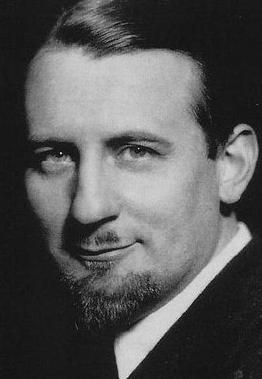
Gerald Gardner may have been the first person to publicly call themselves a “Witch” in a religious sense with his publication of Witchcraft Today in 1954, but his announcement, (alluding to the existence of others as it did), brought forth many who claimed that they too were practitioners of an underground witch religion as described in the anthropological works of Margaret Murray. And while these claims may not have been provable to skeptical outsiders, there is no reason to think they must have necessarily been lying either.
Part of pointing to Gardner as the center of the witch religion zeitgeist is simply one of convenience, as the more one reads of books from the 1920’s-’50s, it is not at all inconceivable how other individuals, or small groups of individuals, would have decided that their spiritual leanings aligned in some way with the survival, or a “renaissance”, of European paganism in the form of what had since Christian hegemony was, for lack of a better term, labelled “witchcraft”. My own Roman Catholic grandmother had in her laundry room library a copy of G. Rattray Taylor’s Sex in History (1953), cited in Gardner’s The Meaning of Witchcraft (1959), where one can see how the “Horned God” was a recognizable concept in anthropological and historical literature about human religious development, and was by no means a talking point limited to adherents of an extremely small minority religious movement. Besides taking a “pagan” perspective on an English folk custom such as Arthur Calder-Marshall did regarding the English tradition of Morris dancing in the May 1930 edition of the Oxford Outlook, or even attempting to find black candles, incense, and amenable young women to celebrate a witch’s “esbat” directly inspired by The Witch Cult in Western Europe (1921), as he recalled in his 1951 memoir The Magic of My Youth, we have plenty of historical evidence that others were thinking along the same, (or very similar), lines to Gardner, and in Calder-Marshall’s case in particular, may have directly inspired Gardner in his creation of the identifiable religion we now call Wicca. Another young man in the ’20s who was calling himself a “Witch” (although a specifically male form of one), was the English music critic Philip Heseltine who adopted the name “Peter Warlock” for his own work as a composer.
Like Calder-Marshall, Warlock’s interest in occult topics such as astrology and Tarot, as well as the proto-Pagan philosophies espoused by Friedrich Nietzsche and Edward Carpenter, were to some degree inspired by, (or at least associated with), the Pagan poet Victor B. Neuburg during his Vine Press years in Steyning, Sussex. Warlock composed a song-cycle based on Neuburg’s 1920 Vine Press publication, Lillygay and Neuburg’s son Victor E. Neuburg recalled in his 1983 memoir of his father, that Warlock was a visitor to Vine Cottage, even if Victor E. had been too young to really remember Warlock himself. Warlock’s music is perhaps best described as 20th century English folk music heavily inspired by the Elizabethan period. His collection Merry-Go-Down: A Gallery of Glorious Drunkards, published in 1929 shortly before his death under yet another pseudonym (Rab Noolas, or”Bar Saloon” backwards) again included Neuburg. Warlock was also for a time a close friend of the famous author D.H. Lawrence, who also died in 1930, and whose works had such an immense cultural impact on the interwar period, and arguably in the creation of Wicca, with the way in which the themes of Lady Chatterley’s Lover, and Lawrence’s working class hero Oliver Mellors and his overtly Rabelaisian “Will”, would again be of immense cultural importance with the “sexual revolution” that coincided with the book’s first uncensored publication in the United Kingdom in 1960, 30 years after Lawrence’s death.
For an emotional portrait of the artistic and social atmosphere in which the 20th century Pagan revival began to take shape, the biography Peter Warlock (1934), written by his long-time friend Cecil Gray, and full of Warlock’s own personal letters, is a fascinating and an eye-opening primary source look at the thoughts of a young man aspiring to Art in Britain during the cultural upheaval of the interwar period. With other compositions with overtly “proto-Wicca” themes such as “Robin Good-Fellow”, the time period in which books such as Murray’s God of the Witches (1931), R. Lowe Thompson’s The History of the Devil: The Horned God of the West (1929), and Theda Kenyon’s Witches Still Live (1929) were being published is vividly brought to life to the soundtrack of Peter Warlock’s music. As a composer with a small cult following, whose life was often as interesting as his art, a couple of films have even been made about Warlock: Voices From a Locked Room (1995) and Some Little Joy (2005).
 Lincoln Green