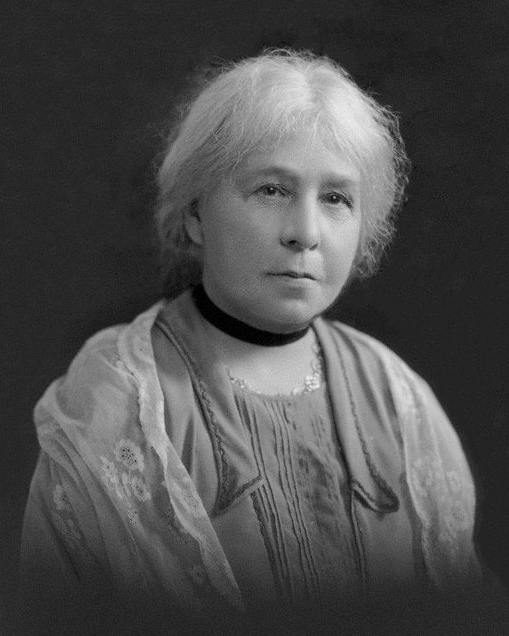
“The Masters have a religion that affirms themselves.” – Nietzsche
While Wicca, or rather more clumsily, “Modern Pagan Witchcraft”, most solidly begins with Gerald Gardner and Doreen Valiente, and while it was demonstrated to be a distinct new religion perhaps most self-awarely and transparently by Raymond Buckland, the religion ultimately would not exist without the massive cultural impact of Margaret Murray’s academically “discredited” witch-cult hypothesis. This makes Wicca a religion uniquely criticized among its neighboring religions both for its “newness” and its foundation on “false history”. The religion has had to make rhetorical arguments from the beginning for its legitimacy within the context of officially Christian, or Christian majority, nations where the perceived antiquity of Christianity, and to a lesser extent Judaism, in relation to “new religious movements”, is much of what lends credence to those faiths in the public consciousness, regardless of their equal basis in mythological histories.
Wicca’s insistence on a human need for Mother Goddess worship, and on the concept of “Devil” as a historical dumping ground for sexual shame and male deities other than Christ, makes the religion “problematic”. It also makes it particularly dismissible in contemporary discourse as a religion of “cultural appropriation” (i.e. immoral) by refusing to be Christian as the vast majority of other Western folk magicians are. This “cultural appropriation” is a dominant criticism of the religion even when Wiccans are more-often-than-not intentionally (i.e. magically) reframing the traditional practices of their own actual ancestors into the context of a religion they sincerely believe to be more authentic and life-affirming for themselves. Leaving most Wiccans in a “damned if you do, damned if you don’t” position in post-colonial academic frameworks, as even if Wiccans cannot be convincingly accused of “cultural appropriation”, their ancestry and persons are then framed as inherently “colonial” (i.e. immoral), and that in itself evidence of need for a “struggle session” of some kind—unless one dutifully remains an “authentic” folk Catholic or Protestant, apparently.
The secretive brotherhood of witches first described in Gardner’s novel High Magic’s Aid (1949), published before Scire’s self-identification as an initiated Witch in Witchcraft Today (1954), was obviously inspired by Margaret Murray’s witch-cult as described in her books The Witch-Cult in Western Europe (1921) and The God of the Witches (1931). Gardner and Murray were for a time even in the same Folk-Lore Society, when previous to her kind and sympathetic introduction to Gardner’s Witchcraft Today, Gerald Gardner in correspondence with Aleister Crowley literary executer Gerald Yorke, (Yorke was also interviewed by Jean Overton Fuller in The Magical Dilemma of Victor Neuburg, 1965) wrote: “unfortunately Magret Murray, instead of being pleased that all her Theorys are proved Right, is most Damnably jealous that she didn’t make the discovery” (see Gerald Gardner and the Cauldron of Inspiration by Philip Heselton, 2003). And in Scire’s private grimoire that would come to be known as the first “Book of Shadows” in the Wiccan religion, (and from which High Magic’s Aid directly derives its Witchcraft rituals), there was admittedly in many ways nothing about his religion that could not be found in either previous monotheistic ceremonial magic, the social aspirations of Freemasonry, the mystical fascination with reincarnation espoused by Theosophy, or the “back to Nature” movements exemplified in England by the philosophy of Edward Carpenter, whose The Art of Creation (1912) would be included in the bibliography of Gardner’s second book as a public Witch, The Meaning of Witchcraft (1959). What really set this “Old Religion” apart as a distinct new religion from all these other movements which certainly influenced its creation, was the anthropological theories about the organized pagan religious practices of medieval Europeans accused of “witchcraft” as put forth by one woman: Margaret Alice Murray. For even as philosophically influential as Carpenter was in his day, he still considered himself to be a Christian, although he advocated for a new theology of the “beautiful God”, that was now to be self-consciously understood by Christians as a “Christ Myth”. This is of course precisely the same way the Witches influenced by Murray were to present their own polytheistic religious mythology regarding a “beautiful Goddess” and her companion God(s), in their own consciously-created, “Myth of the Goddess” and “Myth of the Goddess of Saxon Witchcraft”, (see and compare Gardner’s Goddess myth in Witchcraft Today, 1954 and Buckland’s Goddess myth in The Tree, 1974).
As Buckland wrote in his introduction to The Witch Book: The Encyclopedia of Witchcraft, Wicca, and Neo-paganism (2002):
By the early twentieth century, anthropologist Margaret Alice Murray had proffered her theory that Witchcraft had been a pre-Christian religion, loosely organized among the pagan population of the times. Digging through the records of the witch trials of the Middle Ages, Murray came up with a plethora of details on Witchcraft organization and practice. She even delineated a direct line of descent from the religio-magicians of Paleolithic times to the witches of the persecutions. Her theories were hailed by some and damned by others.
As Buckland would also note in Wicca for One: The Path of Solitary Witchcraft (2004):
It’s impossible to read her first two books on the subject without acknowledging that there is a core of truth to her theory of Witchcraft being an organized, pre-Christian, pagan religion. Her arguments for covens was weak but the evidence from the trials was genuine. Many of her detractors are nowhere near as qualified as she was herself.
Buckland’s observation here is an important one (and comes from someone who was himself an academic in the 1950s) as unlike Christianity, Judaism, or Islam, Wicca was created in the context of 20th century scholarship and is therefore susceptible to a level of scrutiny and belittlement by the vicissitudes of contemporary 21st century academic trends, and the socio-political pressures that shape them, in a way these other religions are not. In gender political discourse what makes Witchcraft so obviously and radically distinguishable from the smorgasbord of “gender-neutral” or perhaps now “non-binary” monotheisms, is Witchcraft’s matrifocal insistence on the agencies of Goddess as Mother (be she Diana, Nerthus, Freya, ect.) of the Gods (Frey, ect.) and Goddesses (Aradia, Freya, ect.) yet without denigration of Fathers and Sons (be he Lucifer/Cernunnos, Woden, Frey, ect.), as the Mother and Daughter were/are so unnaturally demoted in monotheistic theologies. Instead, the God of the Witches proposed by Murray was one no less, no more, “sexualized” than the Goddess, being a role fulfilled by a human Priest that the worshippers could see, touch, and love. Given Witchcraft’s pantheistic identification with its deities through the physical bodies of the Witches themselves—but particularly due to its insistence on Goddesses and a nearly endless plurality of non-monotheistic Gods—there is no reason to expect rhetoric about the moral superiority of “radically inclusive” monotheisms to subside, especially not if the religion were ever to be taken seriously as a philosophical threat.
David Farren, pen name of an ex-Jesuit Roman Catholic priest-in-training who became a Wiccan in the 1970s after losing faith and falling in love, made one of the best appeals to the relevance of religious Witchcraft as inspired by Murray in his 1972 book detailing his early philosophical exploration of the religion. As Farren wrote in The Return of Magic:
Whatever the acceptability of Margaret Murray’s scholarship, the fact remains that she did provide the basis for a completely naturalistic interpretation of witchcraft at a time when the ceremonial magic of the older secret societies had become a complete anachronism. Witchcraft as a religion was a celebration of the forces of nature symbolized on the one hand by the agricultural Diana, the earth Mother, and on the other by the pastoral Cernunnos, the Horned God identified by the Christians with Satan. Its rituals offered an opportunity for an emotional expression of the value of the body and human companionship. To the extent that witchcraft “worked,” it did so by a concentration of the quite natural powers otherwise studied by the parapsychologist.
Witchcraft is a religion that post-dates “first-wave” feminism (the work and ideas of Matilda Joslyn Gage and F. Marian McNeill also being of significant historical importance to the religion,) and Margaret Murray’s perceived role as a woman in academia when it was a male-dominated profession is probably the largest “saving grace” that has been given to her contemporary legacy as a “discredited” academic. Something more like “crank” tends to be the perception of the male academics, such as T.C. Lethbridge or Raymond Buckland, who took her theories seriously. Some rival academics in a field now far more dominated by women than it was in Murray’s day have even said that her scholarship set the academic discipline of folklore so far back, that one can only imagine the utter disdain these academics hold for the sincerely held, world-wide religion of Witchcraft. In fact, I have myself experienced push-back from a college professor (who knew nothing about my personal spirituality) when I wanted to do an undergraduate paper on possible pagan survivals in Viking Age manuscripts, the professor actually quipping derisively about his sister being a Wiccan. So like Doreen Valiente advised, take whatever you find claimed among “disinterested” academics (who invariably have no social, political, or economic incentive to respect religious Witchcraft,) with plenty of ritual salt. Scott Cunningham went so far as to recommend in Living Wicca (1993) ignoring the opinions on the religion of those who were not themselves Wiccan, (something an adherent of any other religion is already assumed to do)—and always look at primary sources whenever possible. Which for the Wica (Seax or otherwise) means reading some Margaret Murray, no matter how “discredited” people may say she is, and interpret the significance of what she believed for yourself.
 Lincoln Green