“We earnestly forbid every heathenism: heathenism is, that men worship idols; that is, they worship heathen gods, and the sun or the moon, fire or rivers, water-wells or stones, or forest trees of any kind; or love witchcraft, or promote morth-work in any wise.” – Laws of King Cnut, 1017-1035
In cold, dark, snow-bound Northern climates where the Sun barely rises in the sky as we approach the Winter Solstice—Yule, and its necessity for human happiness, is an easy Sabbat to understand. Putting up a small spruce, hanging brightly colored electric lights, and choosing a few thoughtful gifts to exchange with loved ones are all traditions comforting and familiar due to the secular celebration of Christmas, but they all also embody and continue the spirit of gratitude that modern Wiccans have for their God, and one who is especially easy to find this time of the year is Frey.
As a God of Fertility, Love, Peace, Light, and Foliate Nature, he is present in the spirit of the evergreen, and bringing indoors a spruce tree during Yuletide is a known survival of the old Germanic pagan tradition of veneration for tree spirits. It is also reminiscent of the story of Frea “Lord” (the Anglo-Saxon “Frey”) heroically climbing the gallows-pole for his people in The Dream of the Rood, which Anglo-Saxon scholar Kathleen Herbert theorized was the method by which the English were officially converted, by simply replacing their beloved Lord with Christ—the “Anointed One”.
One of the Lord’s sacred animals, the pig, is the traditional center of many Yule feasts in the form of a glazed ham, and again, many scholars, including Herbert as recently as 1994 in her Looking for the Lost Gods of England, have speculated this to be a memory of a pagan Yuletide boar sacrifice in honor of Frey. It is also a reminder that in the Saxon tradition of Witchcraft, the Lord is -not- sacrificed (as the Witch God is said to be in some other Witchcraft traditions), but remains the beloved, ever-present God of his people, of whom it was said of Frey in the Old Norse poem Lokasenna, “Of heroes brave is Frey the best” and “He harms not maids nor the wives of men, and the bound from their fetters he frees.”
“The Boar’s Head Carol” is a 15th century English carol referencing the boar sacrifice tradition, and there are other English winter carols that are easily included in the Wiccan Yule circle. “Greensleeves” from the 16th century and “The Pagan Carol” (Doreen Valiente’s adaptation of “The Holly and the Ivy” from the 19th century) might be sung in the coven, as well as a traditional English “Wassail Song”, the word “wassail” coming from Old Norse and meaning “Be well”. For those with an apple tree in their garden, Yule is the perfect Sabbat to pour a libation of mulled cider on the tree’s roots after the coven meeting, in reverence of Frey’s Mother, our Mother, Mother Earth.
Raymond Buckland, in Songs of Saxon Witchcraft (1981) also included a Seax Wica Chant to be sung to the tune of the English carol “We Wish You a Merry Christmas”, which also might be fun to include in a celebration of the Seax Wican Yule Sabbat, if use of the tune adds to the seasonal experience for the coven in question, of course. As Buckland noted, it can be sung in unison, or as a round:
(1) All praise to the Lord and Lady; Yes, praise to the Lord and Lady. Oh, praise to the Lord and Lady, For we love them so.
(2) In honor we hold all our Sabbat Rites; To Woden (To Frey) and Freya (to Freya), all our days and our nights.
(3) All praise to the Lord and Lady; Yes, praise to the Lord and Lady. Oh, praise to the Lord and Lady, For they love us so.
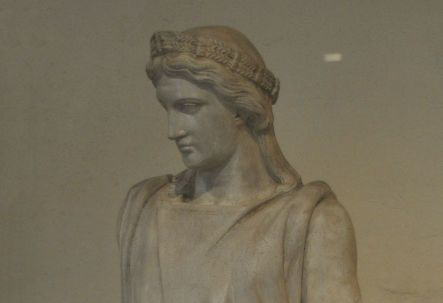
(Statue of Frey by Swedish sculptor B.E. Fogelberg, 1818.)
 Lincoln Green