“Not only celebrating feasts in the abominable places of the heathen and offering food there, but also consuming it. Serving this hidden idolatry, having relinquished Christ. If anyone at the kalends of January goes about as a stag or a bull; that is, making himself into a wild animal and dressing in the skin of a herd animal, and putting on the heads of beasts; those who in such wise transform themselves into the appearance of a wild animal, penance for three years because this is devilish.” – Archbishop of Canterbury, 668-690
“The Northern peoples, again, looking up at their dark, wintry skies, descried in the storm-tossed clouds the white-maned steeds of the Valkyries, and in the flashing of the Aurora Borealis the glitter of their spears…” – F. Marian McNeill, The Silver Bough
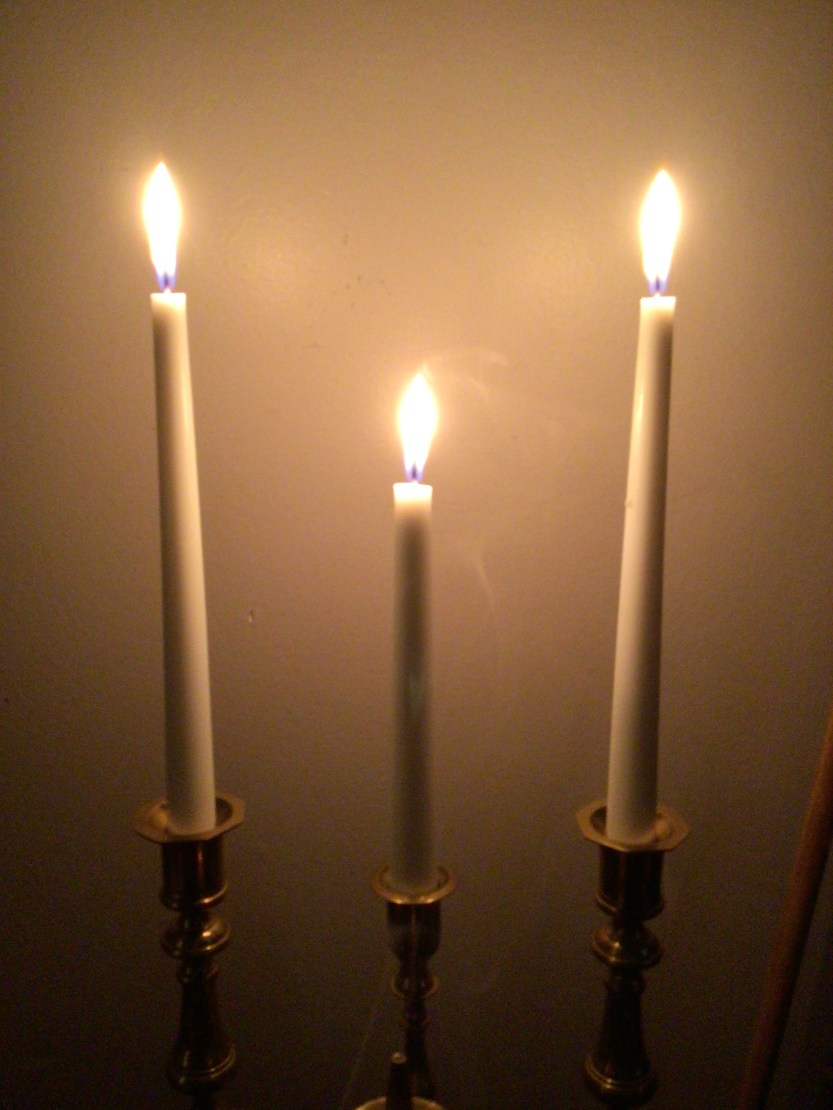
In the Far North, the Witch Sabbat of Midwinter does not occur at Yule, but on February Eve. Additionally, the Saxon Wiccan name for the Sabbat, “Imbolc” derives not from Old English but from Old Irish. It is important to realize that Old English was not written down until there were Christian monasteries in England, and part of this Christianization process included cultural exchange with Ireland where Christianity had already been well-established for roughly two hundred years prior. Given this, it should come as little surprise that the earliest recorded Old English magical charms were written down in manuscripts that also contain some Old Irish. The word “Imbolc” itself, according to many scholars, is a reference to pregnancy and/or lactation in mammals, but whether this is due to the importation of the pre-Christian Latin connotations of February (see Februa “Purifications” and Lupercalia “Wolf Festival”) into Christianized Irish culture, or if it was an indigenous Irish festival prior to Christianization, possibly involving a local pre-Christian Goddess named Brigid who was to later become the patroness of Christian Ireland, is unclear. What is clear, is that February Eve is one of the four Great Sabbats of the Witchcraft religion and that it has a deep connection both to female fertility and to the Horned God of the Saxon tradition, for whom extra candles are lit to bring him forth in Love and Light, especially in the Northlands where spring is still months away.
In Scotland, or “Land of the Scoti” Imbolc also came to be celebrated, as the Scots were originally the name of an Irish tribe who came to power in what had previously been the land of the Picts. Unlike the Irish, there is no manuscript tradition for the Picts, but what has been recorded regarding them by outsiders is very intriguing, particularly in the context of Witchcraft, as their kings were said to rather unusually descend from a process of matrilineal, rather than patrilineal, descent.
The Picts were also speculated by F. Marian McNeill in The Silver Bough (1956) to have had a Sun God, and the Sun is understood in Saxon Witchcraft to be a symbol of the Horned God. But speculations about the pagan Picts aside, we do know that the Saxon Gods were still worshipped as late as the end of the 10th century in Scotland, and this worship most certainly would have included the God Frey. In fact, the open worship of Frey continued longer in Scotland than in Norway, as the colony led by Earl Sigurd of Orkney (Orkney, as an aside, rather serendipitously means “Isle of the Young Boars/Pigs” in Old Irish), was forcibly converted by King Olaf of Norway under threat of death.
Besides candle-making as a useful and practical lead-up to the Sabbat, some other ways of making the most of this time of year and fighting the midwinter “blahs” and “cabin fever” is to plan your summer garden and order any seeds you may need for spring planting. This is also the Sabbat for kicking or scourging (just kidding!) the coven outside after the ritual to enjoy a fire pit, with warm mugs of spiced wine or hot chocolate all around. For the Sabbat feast itself, aside from a very traditional New England boiled dinner and poppy seed cake, make the most of all the delicacies available this time of year (such as out-of-season strawberries) due to the secular celebration of Love just around the corner: Valentine’s Day.
 Lincoln Green